
Operational-level grievance mechanisms are increasingly recognised as an important tool for companies to identify human rights risks and provide access to remedy for affected communities. However, many mechanisms remain focused on managing complaints rather than delivering meaningful outcomes for rights holders. In this article, Jose Fernando Gonzalez Ante examines the gap between international standards and practice, and explores how companies can strengthen grievance mechanisms through genuine community engagement, independent oversight and rights-based approaches that support accountability and meaningful remediation.
Introduction
In the field of business and human rights, non-state-based grievance mechanisms (NSBGMs), particularly operational-level grievance mechanisms (OGMs), are designed to act as a vital grassroots alternative to the formal judicial system. Ideally, they function as an early-warning radar for corporations to identify human rights risks, while giving local communities a direct, accessible way to seek immediate justice when their rights are violated. However, to transform these systems from corporate checkboxes into genuine tools for accountability, it is essential to analyze the international standards that govern them and the structural changes they desperately need.
The rules governing how companies engage with communities are built on international “soft law” guidelines that are rapidly becoming legally mandatory worldwide. At the center of this framework are the UN Guiding Principles on Business and Human Rights, which lay out eight non-negotiable baselines for any grievance mechanism: it must be legitimate, accessible, predictable, equitable, transparent, continuous in its learning, focused on honest dialogue, and completely compatible with international human rights. Building on this, the OECD Guidelines emphasize that while these company systems are excellent tools for swift remedy, corporations can never use them to bypass trade unions or block a community’s right to take their case to courts.
Specialized and highly sensitive sectors have their own strict standards to ensure safety and prevent abuse. For instance, the International Code of Conduct for Private Security Providers Association (ICoCA) requires its member security firms to establish fair, publicly documented whistleblowing and complaint channels. These mechanisms must protect victims and witnesses from corporate retaliation, mandate completely impartial investigations, and enforce disciplinary action to stop future misconduct. Similarly, the EU’s Critical Raw Materials Act uses a massive economic incentive to drive compliance; if a mining or processing company wants to win coveted “Strategic Project” status for extracting transition minerals, they must prove they practice meaningful community engagement and implement transparent compliance policies that actively protect indigenous rights, labor standards, and local ecosystems.
Finally, European regulation is turning these optional guidelines into hard, legally binding obligations across entire supply chains through the Corporate Sustainability Due Diligence Directive (CSDDD). Under this law, member states must ensure that large corporations establish comprehensive complaint and notification systems that cover their own operations, their subsidiaries, and their global business chains. These systems must be wide open to ordinary citizens, trade unions, and civil society groups alike. Crucially, the directive changes the dynamic of corporate responsibility: companies can no longer just sit on complaints; they are legally required to provide reasoned, written answers, meet face-to-face with communities experiencing severe impacts, and treat verified grievances as a mandatory trigger for funding real remediation and mitigation efforts.
I. Beyond legal standards, real remedies?
Even when international standards look perfect on paper, real-world case studies expose deep, systemic flaws in how grievance mechanisms actually treat victims of business misconduct. The first major hurdle is that these systems heavily prioritize process over substance. Because dominant frameworks focus almost entirely on checking administrative boxes—like tracking how quickly a file is procedurally “closed”—they completely ignore whether the victim actually received a meaningful remedy[1]. A stark example of this is the Roundtable on Sustainable Palm Oil (RSPO). Despite scoring highly on procedural benchmarks, a 10-year study of 40 human rights cases revealed that victims received a true remedy that restored their rights in only 1 instance[2]. In fact, in the majority of cases where the company was found at fault, the company either withdrew from the RSPO or sold the plantation to a non-member. While this conveniently “cleaned” the organization’s membership log, it left the actual victims with absolutely nothing[3].
This unfairness is worsened by massive power imbalances and a lack of true independence. Affected communities, particularly in the Global South, rarely have the financial or legal resources to negotiate on equal terms with multinational corporations, forcing them into unfair “take-it-or-leave-it” settlements[4]. Because companies fund and run their own mechanisms, an evident conflict of interest is baked into the system. For instance, in 2012, a subsidiary of Barrick Gold set up a grievance mechanism at the Porgera Mine in Papua New Guinea to handle horrific sexual violence by its security guards; the mechanism’s “independent” legal advisor was paid by and housed directly inside the company’s office. Left without independent legal representation, vulnerable survivors felt they had no choice but to accept whatever the company offered[5]. To make matters worse, the mechanism lacked basic safety and accessibility safeguards; the company relied on “word-of-mouth” rather than public announcements to protect privacy, leaving many victims without reliable information about the mechanism, which had a limited one-year window to receive complaints. Those survivors who did apply had to walk across highly visible public roads to reach a single physical intake office, exposing traumatized women to severe stigma and safety risks[6].
Furthermore, these mechanisms consistently reject a genuine, rights-based approach, opting instead for a cold managerial logic. Companies deliberately avoid using terms like “human rights violations,” rewriting them as routine “operational impacts” or “frictions” to soften their legal obligations[7]. At the Acacia Gold Mine in Tanzania (another subsidiary of Barrick Gold), which since 2008 faced severe allegations of torture and killings by police who protected the mine, corporate documents systematically avoided the word “violations” and framed international human rights laws as merely optional, non-binding policies[8]. This language game allows companies to ignore the need for complete reparation. In one instance, when a company* flooded a local farm with toxic sediment, they simply paid for the immediate dead plants while completely ignoring the farmer’s future lost profits and long-term land damage, considering it a minor operational impact because the farmer technically had other minor ways to survive[9]. Ultimately, this corporate insulation distorts the entire concept of remedy, turning it into a privatized system of “bespoke justice.” In this environment, human rights law is treated like an optional menu rather than a mandatory standard, allowing companies to hand out arbitrary relief without any independent judicial review[10].
The tragedy of this system was laid bare at the Porgera Mine, where survivors described the confusing corporate process as deeply disrespectful. The mechanism completely ignored victims’ input during the design phase and arbitrarily refused to investigate non-sexual physical assaults or killings. Instead of real justice, the company offered survivors minimal goods like chickens, second-hand clothes, and small business grants—but only on the condition that they sign sweeping legal waivers stripping them of their right to ever sue the company in court. The predatory nature of this “bespoke justice” became undeniable when a small group of women bypassed the corporate mechanism entirely, retained independent legal counsel, and settled outside the system for payouts ten times larger than those offered by the company’s private mechanism[11].
II. Towards an Effective Engagement and Remedy
To fix the deep flaws in traditional corporate complaint systems, there’s a need for a complete philosophical shift. Instead of treating complaints like cold legal battles aimed at getting signatures on liability waivers, companies must adopt a restorative justice framework. This approach prioritizes the actual healing and needs of the victims, moving away from corporate “cost-efficiency” logic. It demands genuine corporate accountability—including sincere apologies and real amends—to repair broken relationships and fundamentally change harmful business practices[12].
Equally vital is a dialogic approach, which ensures that solutions are co-created with the community rather than dictated from a corporate stand. By committing to “power cognizance”—which means actively recognizing and pausing to address the massive power imbalances between a wealthy corporation and a marginalized community—grievance mechanisms can avoid offering useless or insulting remedies. This creates an inclusive space where local, lived experiences are genuinely valued. Ultimately, this leads to a decolonial approach to justice, restoring agency to local populations so they become the active architects of their own healing rather than passive recipients of a corporate process[13].
On the ground, this philosophy might translate into several highly effective operational practices:
1. Participatory Design and Evaluation
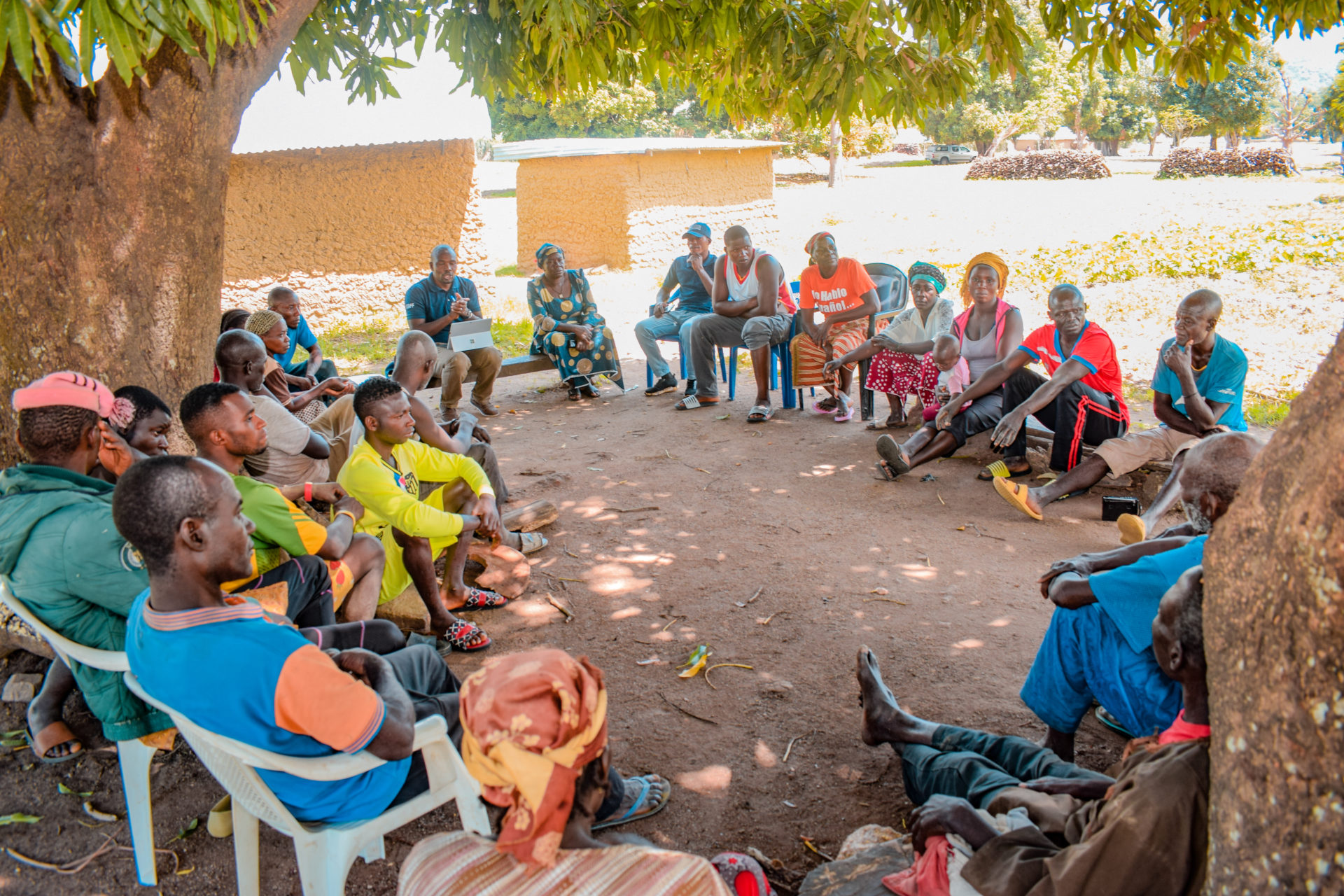
Legitimate grievance mechanisms are never imposed from the top down; they are co-designed with the community to align with local culture and traditions. Companies can map out local leaders, unions, and NGOs to help build the system, define what complaints are allowed, and decide how disputes are resolved[14]. For instance, a small security company in Chad, in the process of entering ICoCA, partnered with local traditional leaders to co-design a mediation process. This included an Impact and Benefit Agreement that locked in set payouts for any damages caused during their operations.
2. Trusted Appeals and Independent Oversight
To build lasting credibility, especially in high-stakes land disputes, complaint systems must include an independent appeals process[15]. In a port project* in Southern Africa, a Council of Elders was established, composed of retired senior community members, to serve as the final appeals body for traditional fishing groups, ensuring the mechanism felt like a natural part of the local social fabric rather than an external corporate imposition[16].
3. Collaborative Investigations and Accessibility
When communities denounce severe environmental or physical harm, joint investigations can break through years of corporate mistrust. In 2006, at the Tolukuma Gold Mine in Papua New Guinea, where locals feared that mine waste was poisoning their river, Oxfam facilitated a diverse assessment team comprising local NGOs, community members, and company representatives. By agreeing to use neutral WHO standards, they verified the environmental claims together, resulting in a formal corporate pledge to achieve zero river impact within three years[17].
To ensure anyone can actually use these systems, companies must provide diverse entry points that match local literacy levels and language needs[18]. During the Las Bambas project in Peru, corporate officers conducted workshops in the indigenous language and allowed community members to make verbal complaints. The receiving officer was operationally required to write the grievance down and read it back to the complainant in the complainant’s native tongue to verify its accuracy[19].
4. Independent Advice and a Robust Gender-Lens
True independence requires that companies provide guaranteed, transparent funding so communities can hire their own legal or technical experts. To prevent conflicts of interest, corporate funds should be “ring-fenced”—meaning the money is secured upfront in an independent trust fund managed by a joint stakeholder committee, completely decoupling it from corporate control. Multiple companies operating in the same area can even co-fund these external advisory pools[20]. In the Mexican electronics sector, Hewlett-Packard partnered with the local NGO CEREAL, which collaborates with a university to give factory workers professional training and diplomas in labor rights. CEREAL then acts as a trusted, expert advocate representing worker grievances directly to management[21].
Finally, these mechanisms must fully integrate an intersectional gender lens to handle sensitive abuses like gender discrimination and sexual harassment. This means maintaining gender-balanced complaint bodies, utilizing specialized, trauma-informed staff, and identifying the unique cultural barriers that stop women from safely filing complaints. Crucially, business enterprises are strictly prohibited from forcing women to sign away their legal rights to go to court as a condition for receiving help. They must also enforce strict anti-reprisal protections to guarantee that women making complaints face zero intimidation or bullying, using continuous learning and sex-disaggregated data to ensure remedies consistently meet international human rights standards[22].
Conclusion
Ultimately, operational-level grievance mechanisms will only work if businesses stop treating them as bureaucratic damage-control exercises which focus on resolving complaints quickly from an operational perspective. True accountability means shifting the entire mindset: treating affected community members not as legal risks to be managed, but as equal rightsholders who deserve a direct say in how they are repaired. By building systems around genuine community co-design, independent funding, and an intersectional gender lens, it can start to balance the playing field. Only when these mechanisms prioritize meaningful, life-changing remedies over corporate convenience can they transform from defensive corporate shields into trusted pathways for actual justice and community trust.
* The information about the company and the specific situations was part of reports and research that anonymized all the information.
Sources
[1] Nikki Reisch, “Non-Judicial Grievance Mechanisms: Hardening the Soft Law of Corporate Accountability?,” in Advocating Social Change through International Law (Leiden: Brill Nijhoff, 2020), 250-281, https://doi.org/10.1163/9789004417021_012; Mark Wielga and James Harrison, “Assessing the Effectiveness of Non-State-Based Grievance Mechanisms in Providing Access to Remedy for Rightsholders: A Case Study of the Roundtable on Sustainable Palm Oil,” Business and Human Rights Journal 6, no. 1 (2021): 67-92, https://doi.org/10.1017/bhj.2020.33.
[2] Harrison, James, and Mark Wielga. “Grievance Mechanisms in Multi-Stakeholder Initiatives: Providing Effective Remedy for Human Rights Violations?” Business and Human Rights Journal 8, no. 1 (2023):62. https://doi.org/10.1017/bhj.2022.37.
[3] Wielga and Harrison, “Assessing the Effectiveness,”; Harrison and Wielga, “Grievance Mechanisms“.
[4] Reisch, “Non-Judicial Grievance Mechanisms”.
[5] Sarah Knuckey and Tyler Giannini, Righting Wrongs? Barrick Gold’s Remedy Mechanism for Sexual Violence in Papua New Guinea: Key Concerns and Lessons Learned (New York: Columbia Law School Human Rights Clinic; Cambridge, MA: International Human Rights Clinic at Harvard Law School, 2015), 5, https://www.rightingwrongsporgera.com/
[6] Knuckey and Giannini, Righting Wrongs?, 73-75.
[7] Ben Gram, “Lost in Translation: Company Grievance Mechanisms and Human Rights,” Journal of Human Rights Practice 17, no. 1 (2025): 1-26, https://doi.org/10.1093/jhuman/huaf009.
[8] Reisch, “Non-Judicial Grievance Mechanisms“.
[9] Gram, “Lost in Translation“, 10-11.
[10] Reisch, “Non-Judicial Grievance Mechanisms”.
[11] Knuckey and Giannini, Righting Wrongs?
[12] Maximilian J. L. Schormair and Laura M. Gerlach, “Corporate Remediation of Human Rights Violations: A Restorative Justice Framework,” Journal of Business Ethics 167, no. 3 (December 2020): 475-493, https://doi.org/10.1007/s10551-019-04147-2.
[13] Lara Bianchi, Robert Caruana, and Anuj K. Shivji, “Engaging Marginalized Stakeholders: Towards a Dialogical Theorization of Effective Corporate-Rightsholder Remedy,” Journal of Business Ethics 201, no. 3 (2025): 605-619, https://doi.org/10.1007/s10551-024-05879-6.
[14] Office of the United Nations High Commissioner for Human Rights (OHCHR), Access to Remedy in Cases of Business-Related Human Rights Abuse: A Practical Guide for State-Based Non-Judicial Mechanisms, HR/PUB/22/3 (Geneva: United Nations, 2024), 46; Gram, “Lost in Translation“, 14-13.
[15] ICoCA, Manual: Developing and Operating Fair and Accessible Company Grievance Mechanisms, 12.
[16] Office of the Compliance Advisor Ombudsman (CAO), A New Port Development in a Peri-urban Area next to an Existing Port under Public-Private Ownership, Grievance Mechanism Toolkit (Washington, DC: CAO, 2016), https://www.cao-ombudsman.org/grm/Tools/A-New-Port.docx.
[17] Corporate Social Responsibility Initiative, Rights-Compatible Grievance Mechanisms: A Guidance Tool for Companies and Their Stakeholders (Cambridge, MA: John F. Kennedy School of Government, Harvard University, 2008), 18, 28, https://www.hks.harvard.edu/sites/default/files/centers/mrcbg/programs/cri/files/report_28_grievance_mechanisms.pdf.Corporate Social Responsibility Initiative, Rights-Compatible Grievance Mechanisms, 18, 28.
[18] OHCHR, Access to Remedy: A Practical Guide for State-Based Non-Judicial Mechanisms, 28.
[19] Corporate Social Responsibility Initiative, Rights-Compatible Grievance Mechanisms, 23.
[20] Corporate Social Responsibility Initiative, Rights-Compatible Grievance Mechanisms, 19-20.
[21] Corporate Social Responsibility Initiative, Rights-Compatible Grievance Mechanisms, 17, 36.
[22] UN Human Rights Council, Gender Dimensions of the Guiding Principles on Business and Human Rights: Report of the Working Group on the Issue of Human Rights and Transnational Corporations and Other Business Enterprises, UN Doc. A/HRC/41/43 (May 23, 2019), Parr. 53-56.
The views and opinions presented in this article belong solely to the authors and do not necessarily represent the stance of the International Code of Conduct Association (ICoCA).